20061205

Luck & Destiny

Luck is defined as preparation and opportunity coming together. Luck is often regarded as a superstition; a chance happening of fortune, but it can be interpreted in many ways.

Destiny refers to a predetermined course of events. It may be conceived as a predetermined future, whether in general or of an individual. It is a concept based on the belief that there is a fixed natural order to the universe.

Fashion or Etiquette ?

The term fashion usually applies to a prevailing mode of expression, but quite often applies to a personal mode of expression that may or may not adhere to prevailing ideals. Inherent in the term is the idea that the mode will change more quickly than the culture as a whole. The terms "fashionable" and "unfashionable" are employed to describe whether someone or something fits in with the current popular mode of expression. The term "fashion" is frequently used in a positive sense, as a synonym for glamour and style. In this sense, fashions are a sort of communal art, through which a culture examines its notions of beauty and goodness. The term "fashion" is also sometimes used in a negative sense, as a synonym for fads, trends, and materialism.

Qualia of Sound

Qualia (from the Latin, meaning "what sort" or "what kind"; Latin and English singular "quale" (IPA: [ˈkwɑːle])) are most simply defined as qualities or feelings, like redness, as considered independently of their effects on behavior. In more philosophical terms, qualia are properties of sensory experiences by virtue of which there is something it is like to have them.

Whether qualia exist is a hotly debated topic in contemporary philosophy of mind. The importance of qualia in philosophy of mind comes largely from the fact that they are often seen as being an obvious refutation of materialism. Much of the debate over their existence, however, hinges on the debate over the precise definition of the term, as various philosophers emphasize or deny the existence of certain properties.

QUALIA - 感質。這個名字是來自拉丁文「qualia」,意即quality品質。在拉丁文裡,「qualia」代表腦部針對無法量化的品質差異之認知功能,是一種非常微妙、難以言喻的感官活動。QUALIA,構成人類感覺得一種獨特質感,心靈感動,讓人留下一生難忘的記憶,透過感覺、經驗、記憶、追求「幸福的感覺」;再將之寄託於「有形」的物體上,,讓人們留下驚奇和感動

OMR

印刷樂譜辨識系統稱為 OMR (Optical Music Recognition),可以自動地辨識光學掃描樂譜,並轉換成電腦可讀格式加以儲存,或轉換為電子音樂MIDI格式播放。

   一般光學字元辨識系統OCR(Optical Character Recognition)與OMR並不完全相同。不像一般文件 - 印刷字元為獨立、固定大小,字元與字元間並不會出現相連情形,樂譜為二維關係 - 五線譜上水平方向不同音樂標誌代表不同音長,垂直方向不同位置代表不同音高,而且樂譜中符號大小並不固定,形狀也為動態,因此,OCR相關技術並不一定適 合用在樂譜辨識上。

20061204

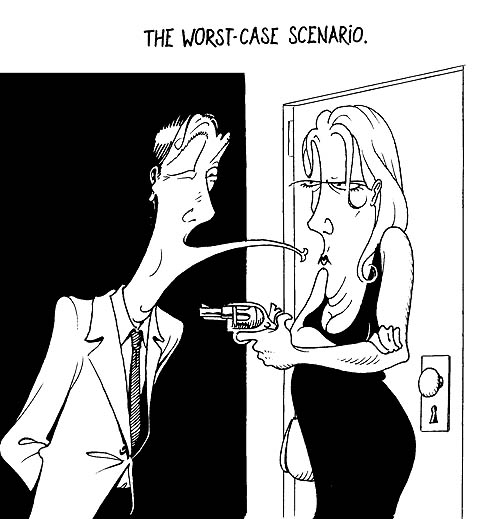
Scenario

A scenario (from the Italian, that which is pinned to the scenery) is a brief description of an event or a series of events. In the Commedia dell'arte it was an outline of entrances, exits, and action describing the plot of a play that was literally pinned to the back of the scenery. It is also known as canovaccio or "that which is pinned to the canvas" of which the scenery was constructed.
In the creation of an opera or ballet, a scenario is often developed initially to indicate how the original source, if any, is to be adapted and to summarize the aspects of character, staging, plot, etc. that can be expanded later in a fully developed libretto, or script. This sketch can be helpful in "pitching" the idea to a prospective producer, director, or composer.

Synesthesia

Synesthesia (also spelled synæsthesia or synaesthesia, plural synesthesiae) -- from the Greek syn- meaning union and aesthesis meaning sensation -- is a neurological condition in which two or more bodily senses are coupled. In a form of synesthesia known as grapheme → color synesthesia, letters or numbers may be perceived as inherently colored, while in ordinal linguistic personification, numbers, days of the week and months of the year evoke personalities. In spatial-sequence, or number form synesthesia, numbers, months of the year, and/or days of the week elicit precise locations in space. For example, 1980 may be "farther away" than 1990), or may have a three-dimensional view of a year as a journey (clockwise or counterclockwise) around an oval.

Mirror neuron

A mirror neuron is a neuron which fires both when an animal performs an action and when the animal observes the same action performed by another (especially conspecific) animal. Thus, the neuron "mirrors" the behavior of another animal, as though the observer were itself performing the action. These neurons have been observed in primates, including humans, and in some birds. In humans, they have been found in Broca's area and the inferior parietal cortex of the brain. Some scientists consider mirror neurons one of the most important findings of neuroscience in the last decade. See for example this. essay by Ramachandran on their potential importance in imitation and language acquisition.

Experienced Content ?

Experience as a general concept comprises knowledge of or skill in or observation of some thing or some event gained through involvement in or exposure to that thing or event. The history of the word experience aligns it closely with the concept of experiment.

The concept of experience generally refers to know-how or procedural knowledge, rather than propositional knowledge. Philosophers dub knowledge based on experience "empirical knowledge" or "a posteriori knowledge".

A person with considerable experience in a certain field can gain a reputation as an expert.

Ventilation Hypothesis

In Expressing Negative Emotions: Healthy Catharsis or Sign of Pathology?, Milton Spett refers to opponents of the ventilation hypothesis:

In the past year, a number of publications have argued convincingly for a paradigm shift in our view of expressing negative emotions. In "Expressing Emotion" (New York: the Guilford Press, 1999), Eileen Kennedy-Moore and Jeanne Watson carefully review the empirical research on the "ventilation hypothesis," the widely-accepted belief that expressing negative emotions, such as anger, sadness, or fear, is good for our mental health, our physical health, and our interpersonal relationships. The authors draw the surprising conclusion that expressing negative emotions tends to increase rather than decrease the emotions, and does not necessarily improve our mental or physical health.

The rest of the article includes these points:

  • experiencing emotions rather than expressing emotions that can lead to cognitive reappraisal and improved mental and physical health
  • the most effective therapeutic interventions should include both moderate emotional expression and cognitive reappraisal.


Zeuxilogy

Zeuxilogy is an alternative, perception-based theoretical system for defining musical rhythmic surfaces, developed by Andrei Pogorilowski. Unlike classical rhythm theory which is based on durational relationships between different time-spans, the zeuxilogic theory is grounded on time-related perception phenomena such as entrainment, Gestalt structuring, creptitus threshold, holistic vs. analytical processing of neighboring pulsations, specific rates of attention shift, natural resonance at the level of the human central nervous system, perception vs. estimation of isochronicity etc. That leads to the possibility of describing different time-spans – or inter-onset-intervals (IOIs) – without relating their durations by means of mathematical ratios. Instead, any time-span is directly related to one or more corresponding perceptual phenomena.

Zig Zag

A zigzag is a pattern made up of many small corners at an acute angle, tracing a path between two parallel lines; it can be described as both jagged and fairly regular.

From the point of view of symmetry, a regular zigzag can be generated from a simple motif like a line segment by repeated application of a glide reflection:

/\/\/\/\/\/\/\/\/\

Equally it is the juxtaposition of chevrons.

A car, for example, could move in a zigzag, that is, not going straight, but instead moving left and right and left and so on. The trace of a triangle wave or a sawtooth wave could be described as a zigzag. Pinking shears are designed to cut cloth with a zigzag edge, to lessen fraying. Zigzags are a basic decorative pattern used on pottery.

Sleep in Animals

Cattle, horses, and sheep are unique in that they can sleep while standing, though none may experience REM sleep in this position, for REM sleep causes partial muscle paralysis. For REM sleep to take place, the animals must lie down. Conversely, birds may have periods of REM sleep while perched. Some breeds of dogs usually sleep throughout the day like cats, while other breeds have only one daily sleep session. While dreaming, dogs may make a quiet barking sound while both cats and dogs may make running motions with their legs.

Utopia

Utopia, in its most common and general positive meaning, refers to an imaginary, ideal civilization, which may range from a city to a world, regarded to be attainable in the future by some.

Human efforts to create a better, or perhaps perfect society are called utopianism. Ideas which could be/are considered able to radically better the world are often called utopian ideas.

"Utopian" in a negative meaning is used to discredit ideas as too advanced, too optimistic or unrealistic and impossible to realize. Hence, for example, the use by Marxists, of such expressions as "utopian socialism".

Beauty

Beauty is an innate and emotional perception of life's affirmative and meaningful aspects within objects in the perceived world – e.g. vitality, fertility, health, happiness, goodness, and love. Cognition of "beauty" involves the interpretation of objects as being in balance and harmony with nature, which in turn elicits a sense and experience of attraction, affection, and pleasure.

Transit of Venus

A transit of Venus across the Sun takes place when the planet Venus passes directly between the Sun and the Earth, obscuring a small portion of the Sun's disc. During a transit, Venus can be seen from the Earth as a small black disc moving across the face of the Sun. The duration of such transits is usually measured in hours (the transit of 2004 lasted six hours).

Value

Value theories investigate how people positively and negatively value things and concepts, the reasons they use in making their evaluations, and the scope of applications of legitimate evaluations across the social world. When put into practice, these views are meant to explain our views of the good.
At the general level, there is a difference between moral and natural goods. Moral goods are those that have to do with the conduct of persons, usually leading to praise or blame. Natural goods, on the other hand, have to do with objects, not persons. For example, to say that "Mary is a morally good person" might involve a different sense of "good" than that in the sentence "A banana split is good."
Ethics tend to be more interested in moral goods than natural goods, while economics tends to be more interested in the reverse. However, both moral and natural goods are equally interesting to goodness and value theory, which is more general in scope.

Pun

A pun (also known as paronomasia) is a figure of speech which consists of a deliberate confusion of similar words or phrases for rhetorical effect, whether humorous or serious. A pun can rely on the assumed equivalency of multiple similar words (homonymy), of different shades of meaning of one word (polysemy), or of a literal meaning with a metaphor. Bad puns are sometimes called "cheesy".

Walter Redfern (in Puns, Blackwell, London, 1984) succinctly said: "To pun is to treat homonyms as synonyms".

In order to be able to pun effectively it is necessary that a language must include homonyms which may readily be misrepresented as synonyms. Languages with complex gender or case structures tend not to facilitate this, although puns can be constructed in all languages with varying degrees of difficulty; i.e. puns are said to be easy to construct in languages such as Chinese or English, but rarer in Russian.

Birth order

The phrase birth order is defined as a person's rank by age among his or her brothers and sisters. There has been much debate within the academic community in recent years over whether and how birth order influences the characteristics of an individual.

Family roles govern the perceived expectations and responsibilities placed on children by parents and siblings. Children’s perception of their place in the family constellation influences how they feel about themselves and how they interact with others.

Nostalgia - running back into the womb

Nostalgia describes a longing for the past, often idealized.

The term was originally coined by Johannes Hofer, a medical student in 1678 (νόστος = nostos = returning home, άλγος = algos = pain/longing) roots, to refer to "the pain a sick person feels because he wishes to return to his native land, and fears never to see it again". This neologism was so successful that people forgot its origin. Moreover, its original meaning--referring to a serious medical disorder--has been lost as the word nostalgia entered everyday language.

Random or Deterministic?

Send sounds through body

A music player that sends signals through the human body, without wires, Bluetooth, or other conventional transmission technologies, could be on the horizon.
Sony has found a way to transmit radio signals through a wearer's body to earphones that convert the signals back to sound. Sony applied for a patent for a "human body communication system and communication device."
The system would use the body as a capacitor that is part of a field carrying an electrostatic charge from a transmitter to a receiver. Conductive cloths and fabrics would charge the users' bodies. Earphones would contain electrodes for receiving and translating the signal into sound.
The charge would be mild and would not cause tingling, according to the company's statement in its patent application. The communication device would be secretive, and could operate without interference from other radio devices in a neighborhood, which the Sony application points out is a problem with Bluetooth. The body system could carry 48 kilobytes of data per second, according to Sony's application, which repeatedly calls its setup an "excellent" body communication system.

20061203

Christmas Tree

Volver,"Coming Back"

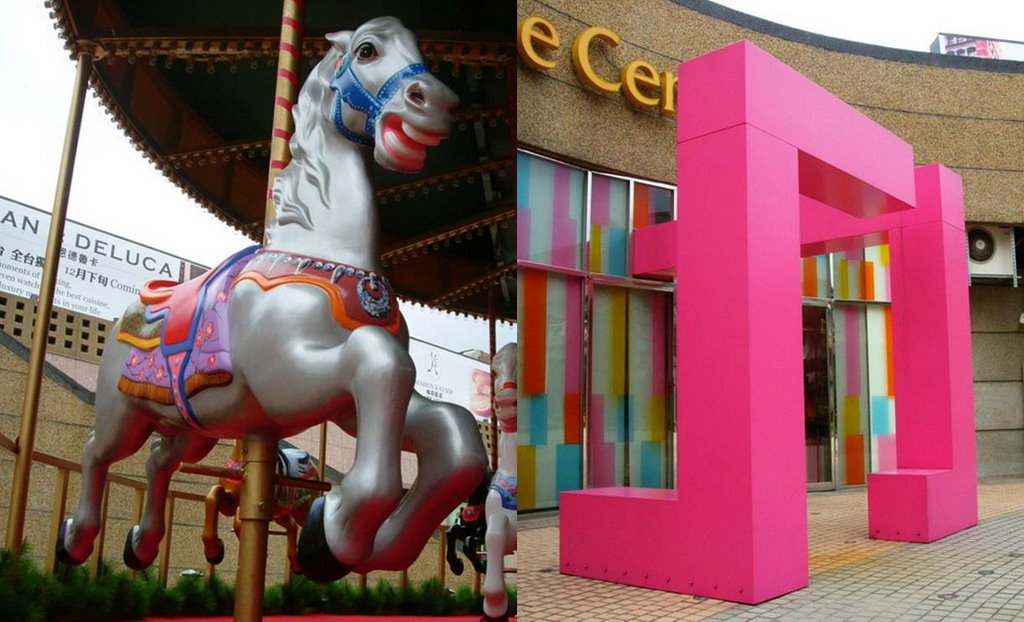
Pink Gate Crossing

X'mas Coming!

Lady Beetle @ Forest

You can't see the forest for the trees, but onlookers see the whole game.The participant's perspective are clouded while the bystanders' views are clear.

But, how about we human?

Social Construction

A social construction, social construct or social concept is an institutionalized entity or artifact in a social system 'invented' or 'constructed' by participants in a particular culture or society that exists solely because people agree to behave as if it exists, or agree to follow certain conventional rules.
Obvious social constructs include such things as games, money, school grades, titles, nationality, governments, universities, corporations and other institutions. Debatable social constructs include language, class, race, gender, religion, childhood, sexuality, morality, memory and reality.

Mental Imagery

A mental image is a term used in philosophy and communication studies to describe the representation of an idea in a person's mind. According to some biologists and anthropologists, the ability to form and recall mental images, to learn about the world from them, and to communicate to others about them is unique to the human species, while others claim to have found evidence of this capacity in other species. This debate in the biological sciences is generally ignored in modern and historical philosophy, which tends to focus on human cognition.

Lost in Between

2-plane vs. 3-sphere

An image of one of the most accurate spheres ever created by humans, as it refracts the image of Einstein in the background. A fused quartz gyroscope for the Gravity Probe B experiment which differs in shape from a perfect sphere by no more than a mere 40 atoms of thickness. It is thought that only neutron stars are smoother.

20061202

Royal Palm Blvd.

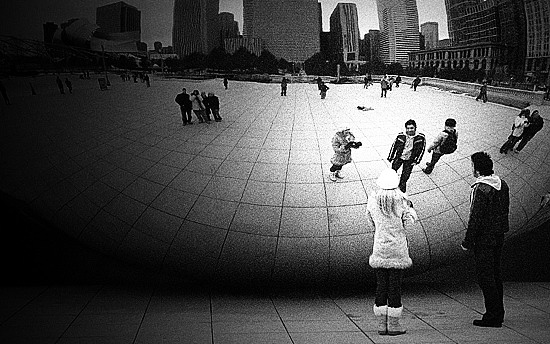
Me & distorted I

bEEf nOODLe

Merce Cunningham & John Cage

The collaboration between John Cage, the composer, poet and artist, and Merce Cunningham, the dancer and choreographer, extended from 1942, when they met at Seattle's Cornish School, and continued until Cage's death in 1992. Their personal relationship is well established from personal commentary but is not mentioned in the literature because the temper of the time was not "out" as it is today.

Sound Pictograms

The representation of music in notation form is interesting when composers have developed their own idiosyncratic forms of notation. The resulting scores double as sound pictures, esoteric diagrammatic representations of sound in space and time.They are like magickal sigils understandable to only those who have the keys to work with them and understand their semiotics. Of course just like magickal sigils these images are interesting in themselves and beckon decipherment. Today my travels have lead me to collect some examples of ‘notation art’.
The blockmuseum has a page devoted to experimental graphical notation where you can zoom into each score and view its details.
Here are some more examples: Variations – John Cage Fontana mix – John Cage
Often Cage used methods of randomness to bring about indeterminacy in his music, for example sometimes a piece involved the use of clocks allowing it to change throughout the day. We could call this work generative I think; the random algorithmic generation being controlled by external environmental artefacts.
Edges - Christian Wolff King of Denmark – Morton Feldman Tunnel Spiral - Stockhausen

Religere = Connection

Religion is a system of social coherence based on a common group of beliefs or attitudes concerning an object, person, unseen being, or system of thought considered to be supernatural, sacred, divine or highest truth, and the moral codes, practices, values, institutions, traditions, and rituals associated with such belief or system of thought. It is sometimes used interchangeably with "faith" or "belief system"[1], but is more socially defined than that of personal convictions. The development of religion has taken many forms in various cultures.

Seeing From Coastal

空盪盪的月台 入秋微涼的海
微風把腳下的樹葉都吹開
火車就要出發催促我快離開
我的心已超載 你不了解的愛
當失望逐漸將一切都掩埋
沒想到害怕更真實存在
在沿海地帶放逐我的愛 孤單也很精采
我相信我們都有該去的未來 不該在原地徘徊

我其實很明白 夢醒了就不在
只是還掙扎著不讓他離開
緊緊抓著的也都是空白
在沿海地帶放逐我的愛 孤單也很精采
我相信我們都有該去的未來
不該在原地徘徊
在沿海地帶我遠遠離開 要更自由自在
不要我的心隨著大廳的鐘擺 停留在原地感慨
《弦子‧沿海地帶》

Paradoxical Conquest

Should Past be Past ?

20061201

Chemical Equilibrium

Chemical equilibrium is the state in which the concentrations of the reactants and products have no net change over time. Usually, this state results when the forward chemical reactions proceed at the same rate as their reverse reactions. The rates of the forward and reverse reactions are generally not zero but, being equal, there are no net changes in any of the reactant or product concentrations. This process is known as dynamic equilibrium (Atkins & Jones, 2001). Fundamentally, reactions do not go fully to completion, but reach an equilibrium, because of the entropy of mixing associated with reaction.

World AIDS Day

World AIDS Day, observed December 1 each year, is dedicated to raising awareness of the global AIDS pandemic caused by the spread of HIV infection. AIDS has killed more than 25 million people, making it one of the most destructive epidemics in recorded history.
From 1988 to 2004, the World AIDS Day was organized by UNAIDS, who, after consultation with other organizations, chose a theme. In 2005 UNAIDS handed over responsibility for World AIDS Day to The World AIDS Campaign (WAC), an independent organisation. For 2005, they chose Stop AIDS: Keep the Promise as the theme for World AIDS days through to 2010.

Se Hjärnan!

Anders Sandberg (born July 11, 1972) is a Swedish neuroscientist, science debater, futurist, transhumanist, and author.
His other interests include physics, astronomy, biomedicine, psychology, complexity theory, art, science fiction, roleplaying, computer graphics, artificial intelligence, cognitive science, Information visualization, Intelligence amplification technologies, and the philosophy and politics of human enhancement.

Nomic

Nomic is a game in which the rules of the game include mechanisms for the players to change those rules, usually through a system of democratic voting.
Nomic is a game in which changing the rules is a move. In that respect it differs from almost every other game. The primary activity of Nomic is proposing changes in the rules, debating the wisdom of changing them in that way, voting on the changes, deciding what can and cannot be done afterwards, and doing it. Even this core of the game, of course, can be changed.

—Peter Suber, the creator of Nomic, The Paradox of Self-Amendment, Appendix 3, p. 362.

The game is in some ways modeled on modern government systems, and demonstrates that any rule-changing system can get into a situation in which the laws are contradictory or insufficient to determine what is legal.

Douglas Richard Hofstadter

Douglas Richard Hofstadter (born February 15, 1945 in New York, New York) is an American academic. He is probably best known for his book Gödel, Escher, Bach: an Eternal Golden Braid (abbreviated as GEB) which was published in 1979, and won the 1980 Pulitzer Prize for general non-fiction. This book is commonly considered to have inspired many students to begin careers in computing and artificial intelligence, and attracted substantial notice outside its central artificial intelligence readership owing to its drawing on themes from such diverse disciplines as high-energy physics, music, the visual arts, molecular biology, and literature.

╳∪∟ F

Manifold

A manifold is an abstract mathematical space in which every point has a neighborhood which resembles Euclidean space, but in which the global structure may be more complicated. In discussing manifolds, the idea of dimension is important. For example, lines are one-dimensional, and planes two-dimensional.In a one-dimensional manifold (or one-manifold), every point has a neighborhood that looks like a segment of a line. Examples of one-manifolds include a line, a circle, and two separate circles. In a two-manifold, every point has a neighborhood that looks like a disk. Examples include a plane, the surface of a sphere, and the surface of a torus

Odd


Endless Election

Self-Reference

Style

Srt & Acience

Cumulonimbus

Cumulonimbus (Cb) is a type of cloud that is tall, dense, and involved in thunderstorms and other bad weather. The clouds can form alone, in clusters, or along a cold front in a squall line. Cumulonimbus clouds form from cumulus clouds.